Seaweed Tightrope: How Sway Navigates Greenwashing vs. Greenhushing
Can a "progress, not perfection" mantra help a seaweed startup survive the messy reality of global supply chains, ingrained consumer preferences, and ardent environmentalists wanting transformation?


It's 8:25 a.m. and I'm trying to wrangle a cranky toddler into a pair of pants while convincing her to eat her waffle. If I can pull this off in the next five minutes, I'll be able to make it to my coworking space at 9 and have a productive day. But if we mosey about, a series of closed school gates, traffic, and cortisol buildup will basically blow up my morning.
So, I do the only sensible thing I can think of and grab a bunch of packaged snacks and quasi-meals for both of us to eat on-the-go. But every time I do this, I feel the pang of eco-guilt, looking at all the single-use plastic I'm consuming in the name of convenience.
Still, as much as I like to think of myself as an environmentalist, it's hard to resist the temptations of modern society that aren't so sustainable. It would be nice to eliminate single-use plastic, but that's not immediately practical for most people.
Behavior change helps, but to really move the needle, we need innovation.
EVs, for one, help address the reality that cars aren't going away anytime soon. And while solutions like public transit might help, EVs offer a better alternative to ICE cars, despite being imperfect.
The same is starting to happen with plastic.
Ironically, what's generally considered the first synthetic plastic, invented in the mid-1800s, was made from a mixture of cotton, acids, and vegetable oil, according to the UK's Science Museum. But petroleum soon became the dominant input, creating cheap, ubiquitous plastic that contributes to climate change and leaves the world awash with waste that typically takes centuries to decompose.
So, some companies have been creating alternatives, like compostable plastic made from plant-based materials, like cornstarch. Yet many of these offerings still contain large proportions of petroleum, just structured in a way that's still compostable, but often only in industrial settings.
Lately, however, a wave of startups has been experimenting with materials like seaweed, which can provide a similar experience and convenience that petroleum-based plastic offers, generally with less environmental degradation. Seaweed also has potential advantages over some other plant-based feedstocks (though it depends on the full production circumstances), like not requiring land or freshwater to grow.
Sway is one of the forerunners in this space. The first-place winner of the Tom Ford Plastic Innovation Prize, Sway is a materials science company that's largely using seaweed to create more sustainable types of plastic in formats like resin, thin films, and bags, to chip away at what some calculate as 160,000 plastic bags used per second around the world.
On the surface, Sway's products sound like a perfect solution. Just replace traditional plastic with seaweed, and we can keep consuming to our hearts' content, while enjoying the convenience and sanitary benefits of plastic.
Unfortunately, making this switch isn't that simple, due to a mix of technological, logistical, and economical challenges.
As Sway tries to drive sustainable change forward, it has to contend with these limitations and communicate with stakeholders in a way that balances its vision of a more sustainable future, without exaggerating its impact.
Looking at how Sway tries to stay on the right side of this line can provide valuable lessons for other companies trying to communicate their environmental efforts while acknowledging that sustainability is a journey.
Seaweed Entanglements
While seaweed can form the basis of a bioplastic or provide a plastic-like coating, such as for some food packaging, it's not a 1:1 replacement for all traditional plastic.
In many cases, at least based on current technology, seaweed needs to be blended with other materials to provide similar performance in areas like durability and moisture resistance. And even when the end product is pretty much interchangeable with traditional plastic, companies like Sway need to overcome barriers like cost and integrating into existing supply chains.
As such, seaweed is what Sway calls its "superhero ingredient," and it generally leads with seaweed in its marketing. Yet Sway's products rely on a mix of materials, so it has to balance promoting seaweed while still being transparent that none of its products are currently 100% seaweed.
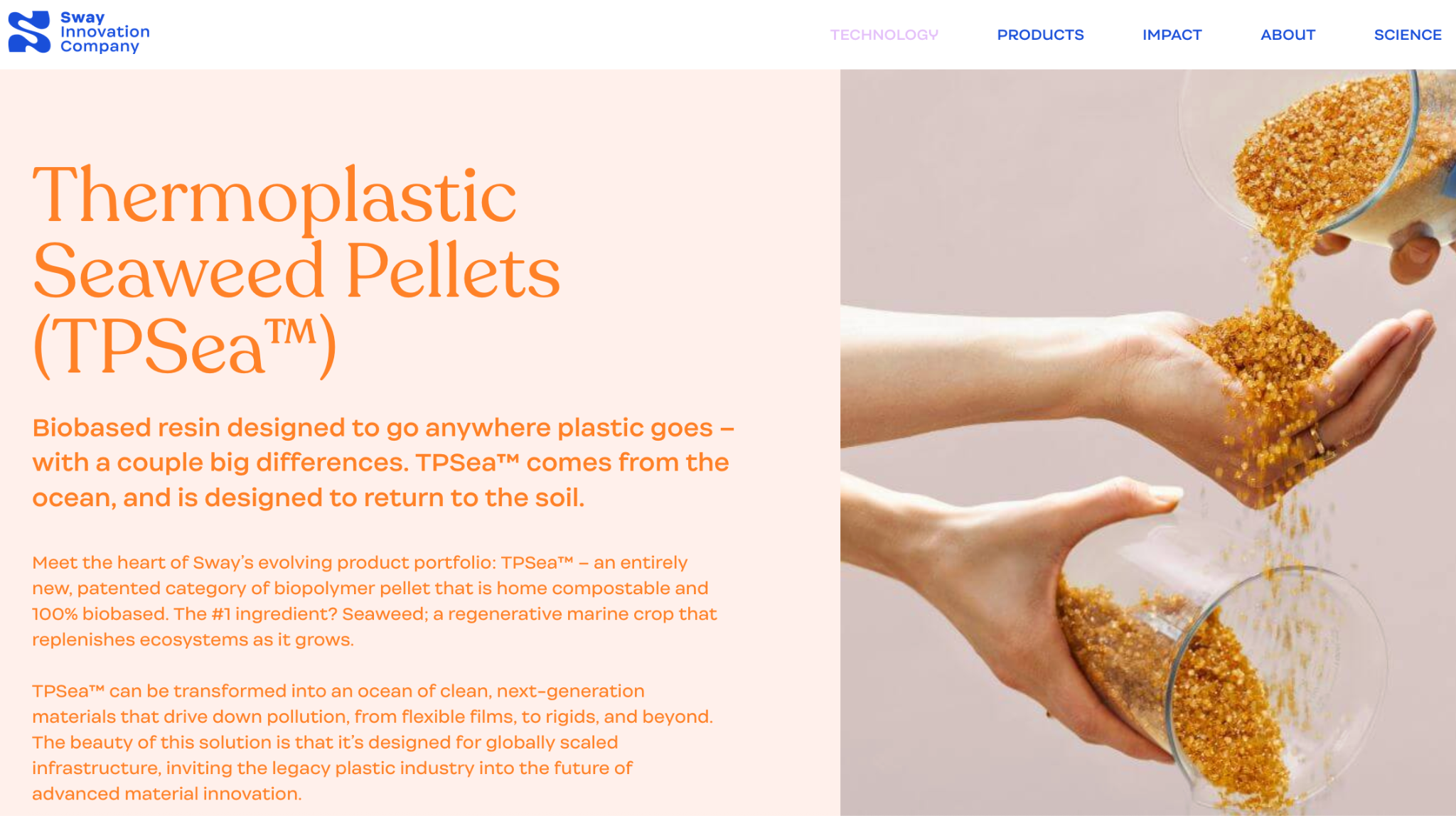
Still, some of its products, like its TPSea pellets, are entirely made from seaweed and plants, meaning they're 100% biobased.
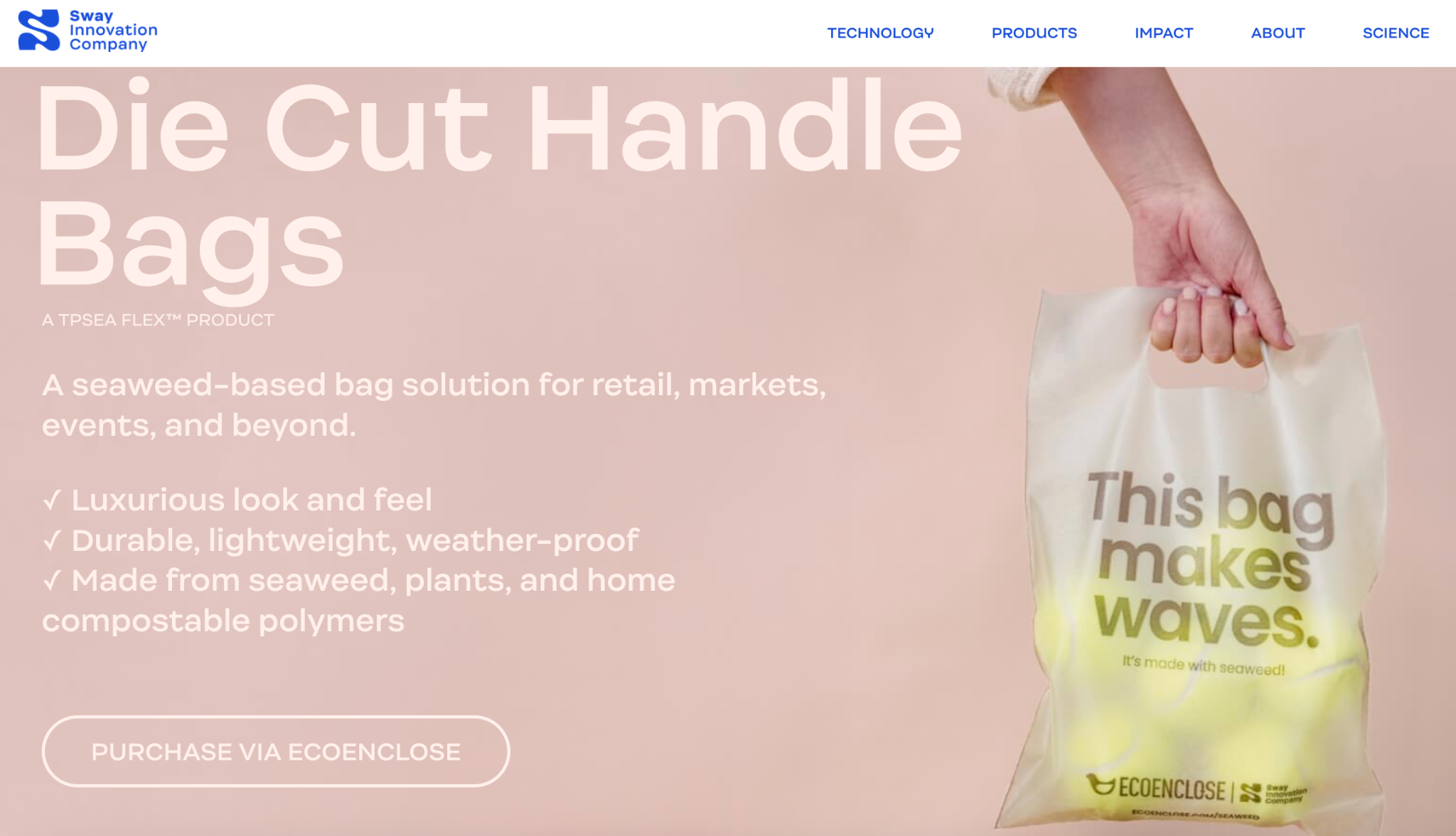
Others, however, like its polybags (those ultra-thin plastic bags used to seal a t-shirt, for instance) and handle bags, incorporate TPSea pellets with what it calls "home compostable polymers."
This is where it gets even trickier from a communication standpoint. Depending on your perspective, Sway's copywriting could make it sound like an environmental pioneer or a greenwasher.
In Sway's case, home compostable polymers, depending on the product, sometimes mean petroleum-based molecular structures. Some consider petroleum-based polymers to still be virgin plastic, but Sway maintains that it does not use virgin plastic.
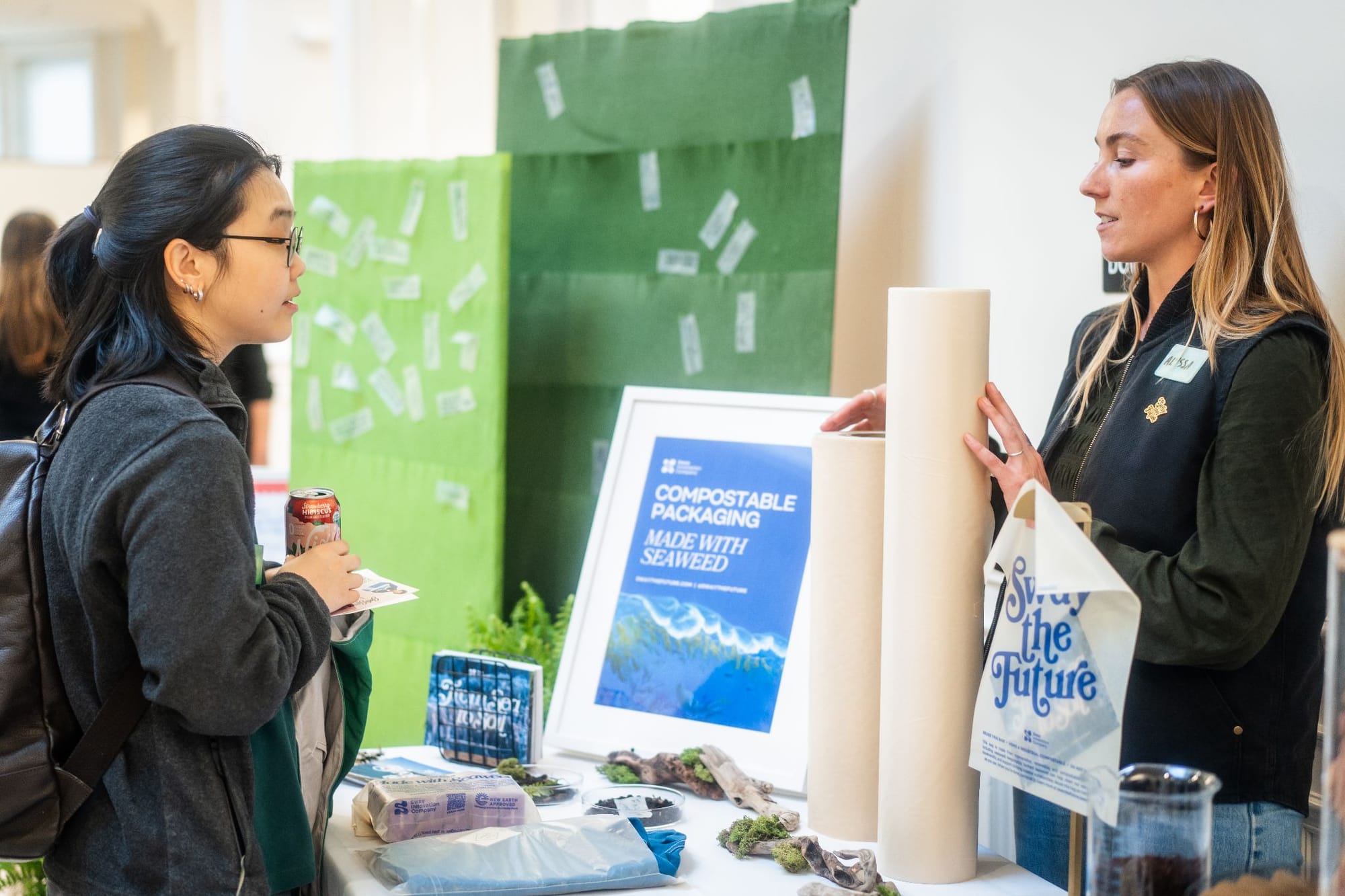
"Plastic is about both ingredients and end-of-life. Public perception of what plastic is typically has to do with its behavior in the environment. Our opinion is that labeling compostable materials as virgin plastic would be both inaccurate and misleading," says Alyssa Pace, head of marketing and communications at Sway.
But whether or not you want to call it virgin plastic is sort of beside the point.
Even the definition of plastic is somewhat ambiguous, but arguably what matters most is the net human and planetary effects. And Sway sees itself as working toward a more positive impact, including recently certifying TPSea Flex, a thin film which includes petroleum-based polymers, as certified for both home and industrial compost by TUV Austria (a leading international certification group).
"I think the confusion probably comes from how can a petroleum-derived polymer be home compostable," says Julia Marsh, CEO and co-founder of Sway.

"Traditional plastic is engineered to last as long as possible, while the polymers we use are engineered to fully biodegrade in home compost or industrial compost and decompose in soil as certified by TUV Austria," explains Marsh.
"The key factor is the type of chemical bonds in the polymer…that connect the monomers together. So any non-renewable polymer we use in our material contains ester bonds that soil microbes can break down naturally with their enzymes, unlike traditional plastics, which have carbon-carbon bonds that microbes can't unlock," says Marsh.
To some, this all still sounds like an excuse to sell more petroleum-based plastic, while hiding behind seaweed. However, I do believe Sway is making a net positive impact and has the right intentions. Yet we're in a tricky era.
The U.S. political mood in 2026 doesn't overtly seem to champion environmental causes, and there's an affordability crisis causing many consumers to care more about financial value than moral values. Meanwhile, after years of companies making empty statements about "going green," many within the environmental movement have tried to hold companies more accountable, which sometimes means eating their own.
Plenty of sustainability-minded individuals are quick to criticize companies for not doing enough or saying the wrong thing. That adds up to an era of greenhushing, where companies don't want to say anything about sustainability at all.
In my view, Sway admirably walks the line between saying too much and saying too little. Seaweed leads the way in its communication, but it's careful with its wording.
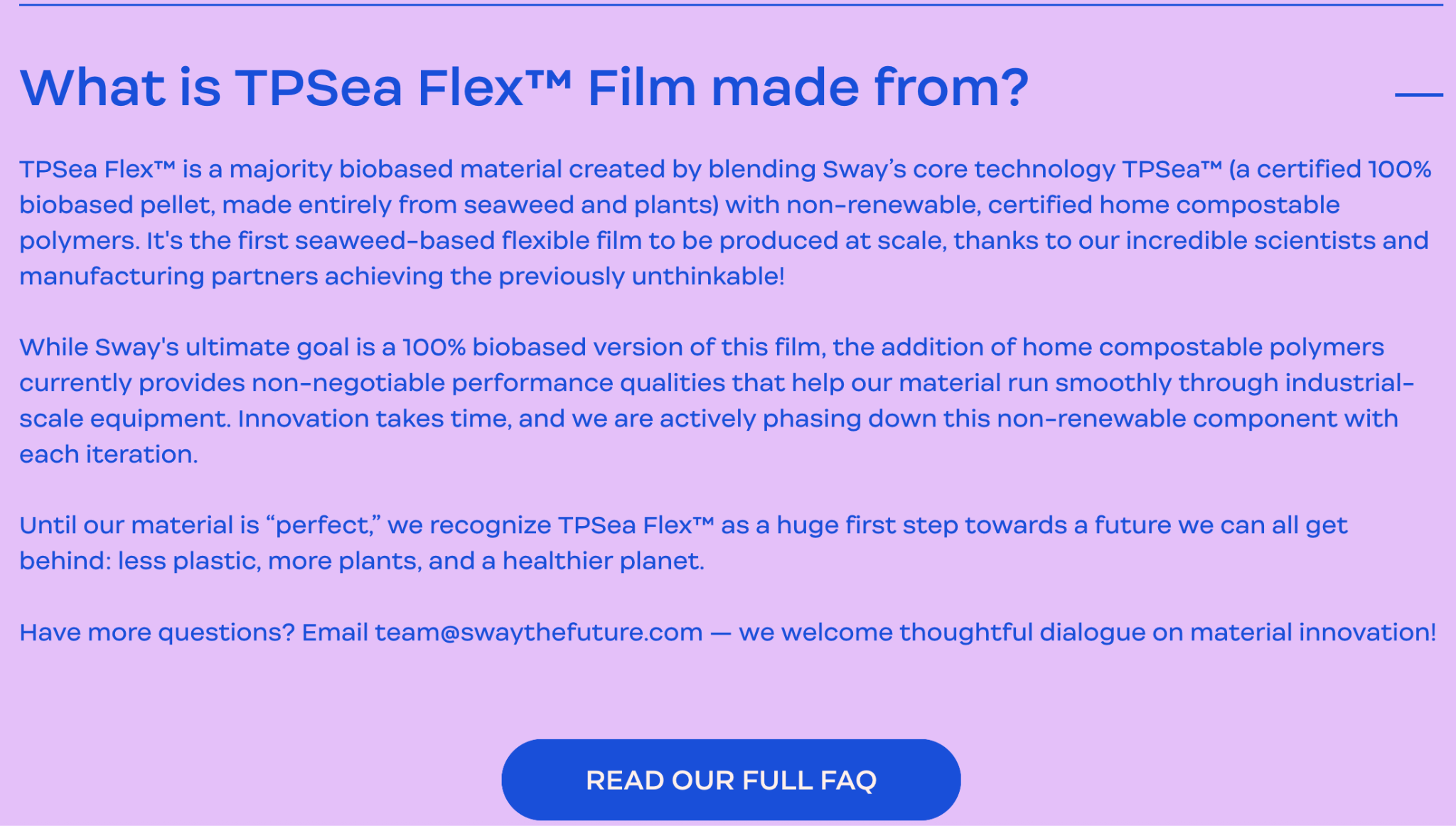
For example, it notes on its website that its TPSea Flex film is "majority biobased" while also saying it uses "non-renewable, certified home compostable polymers."
Could it be even more transparent and say that involves petroleum? Sure. But that also risks pushing customers away, and if no one is buying these types of products, then it's arguably even harder to displace traditional plastic.
Meanwhile, Sway isn't resting on its current innovations. The company clearly talks about improving its materials to rely less on non-renewable inputs.
"Obviously, we want materials that are 100% biobased. That's our thesis at our company. So every iteration of our product is only going to incorporate more biobased content. Our goal is to design technologies that are 100% biobased that can help push the petroleum out," says Marsh.
"Progress, Not Perfection"
While Sway wants to move toward petroleum-free products, the larger system isn't always ready for more sustainable solutions.
One of Sway's products, called Firstwave, is a film made solely from seaweed and other plants, so it's 100% biobased. Originally, that's what Sway used to make polybags.
However, "Firstwave didn’t perform optimally at scale in polybag format,” says Pace. “It also cost more than customers were willing to pay. It’s still a totally viable material to use in other formats, but we are currently focused on scaling TPSea Flex, which includes petroleum-based home compostable polymers, in polybag and retail bag formats.”
In particular, the problem was that these 100% biobased bags couldn't "run quickly enough in standard manufacturing equipment for them to be affordable. It created a difficult situation as innovators where we've made this amazing, perfect material, and it can't work in the way that the system has been built," adds Marsh.
"So we've adopted a 'progress, not perfection' mantra," she explains. "Perfection doesn't happen overnight."
"It's also really important to lift up anyone who's trying to make a difference, even if it's imperfect. I think when we focus our energy just criticizing people who are trying, rather than celebrating progress, we risk compromising the change that we want to see," she adds.
Living up to that ethos includes working with the traditional plastics industry. While that might mean slower movement toward 100% biobased polybags, it can arguably lead to greater long-term impact.
"We primarily work with packaging distributors within the traditional plastics industry. I love this aspect of our company, because I feel like the transition to green technologies often leaves incumbents behind," says Marsh.
"This way, they're actually the enablers for the change," she explains. "If you get the guys who are making the plastic on board with seaweed-based solutions, that's how you actually achieve scale and impact."
"And every time we introduce a new formula or as we gain the trust of the traditional plastics industry, we can incorporate more and more biobased content," adds Marsh.
Sway can also potentially make more progress as a function of time and capital.
"We're a seed-stage startup and we are innovating in the space of the never-been-done-before. So at this stage, we're constantly innovating our products in pursuit of this mission to mainstream materials that replenish the planet. And what we're offering today is going to be different than what's offered in six months, just because of how quickly the space moves," says Pace.
Using Less
Another tension Sway has to contend with is that even if its intentions are good, perpetuating the use of plastic — especially when there's still a petroleum component for now — can have a negative impact.
To that point, Sway takes a pragmatic approach. As it notes on its website, it's better to not use any packaging at all, if possible, but sometimes plastic-like materials are necessary.
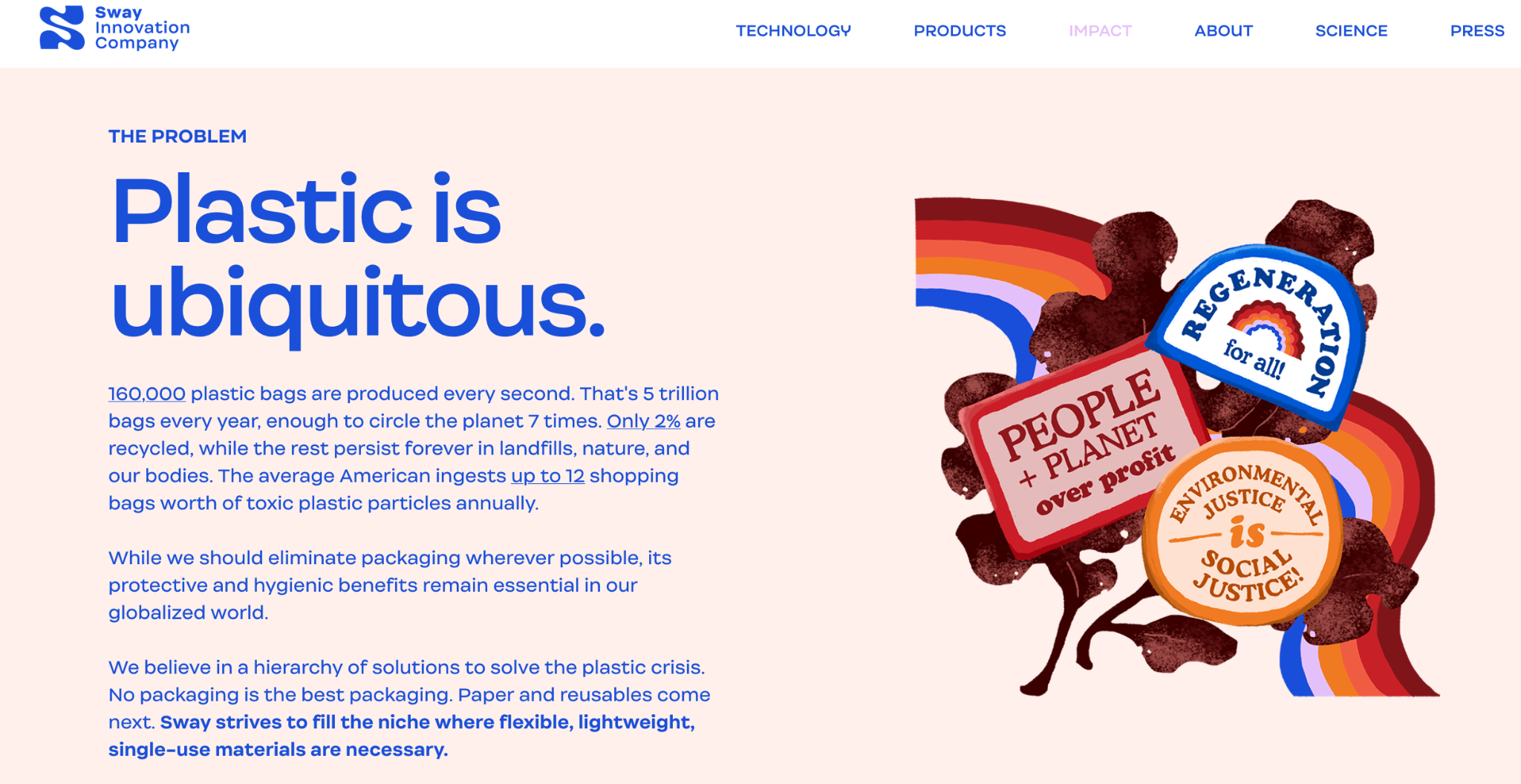
"I am 10 million percent on board with let's just use less," says Marsh. "Often, when we're meeting with customers, we explore if the packaging is actually necessary."
"And where we think our material fits best is in those places where packaging is really necessary, where it's just the way the system's designed, like you just have to have a bag in that situation to protect the product from being damaged. Or you just have to have a wrapper so that the food can be hygienic," she adds.
Other plastic alternatives like paper can be viable at times, and Sway even notes that there's a hierarchy of materials, where paper and reusable packaging should be used before Sway's products.
Still, there are times when that's impractical, like when a paper bag gets wet and breaks, notes Marsh. Or consumers wouldn't adopt a reusable alternative.
"You can't imagine a Clif Bar coming in a tin can or being package-free, right? While I wish everyone would just bulk shop and get their granola with a scooper and put it in their reusable bag, that's just not a reality today," says Marsh. "So compostable materials like ours can really help fill in that gap."
With my single-use packaged snacks dilemma, for example, there's clearly a less wasteful alternative that I sometimes do — pack up food in reusable containers. But the reality is I don't always wake up early enough or think ahead the night before to do that, and even when I do, I'm still often drawing from a plastic bag or plastic-lined container, I just get more than one serving from it.
So, while many consumers like me and various parts of the supply chain want to adopt better solutions, sometimes that means accepting imperfections along the way. And for other businesses that want to act more sustainably and contribute to a better world, there will likely similarly be an imperfect process.
That's where transparency comes in. If you can be open about what you're trying to accomplish and where you're short of your goals — like with Sway explaining that it wants to but can't fully move to 100% biobased products while achieving scale — you can potentially make more impact than if you shy away from sustainability goals entirely.
Disclosure: Carbon Neutral Copy's parent company, JournoContent LLC, has clients involved in sustainability-related areas, among others. The owner of Carbon Neutral Copy, Jacob (Jake) Safane, has investments in sustainability-related companies, among others.
As such, conflicts of interest related to these and other investments/business relationships, even if unintended, may exist at times. Please email info@carbonneutralcopy.com if you'd like further clarification on any issues.